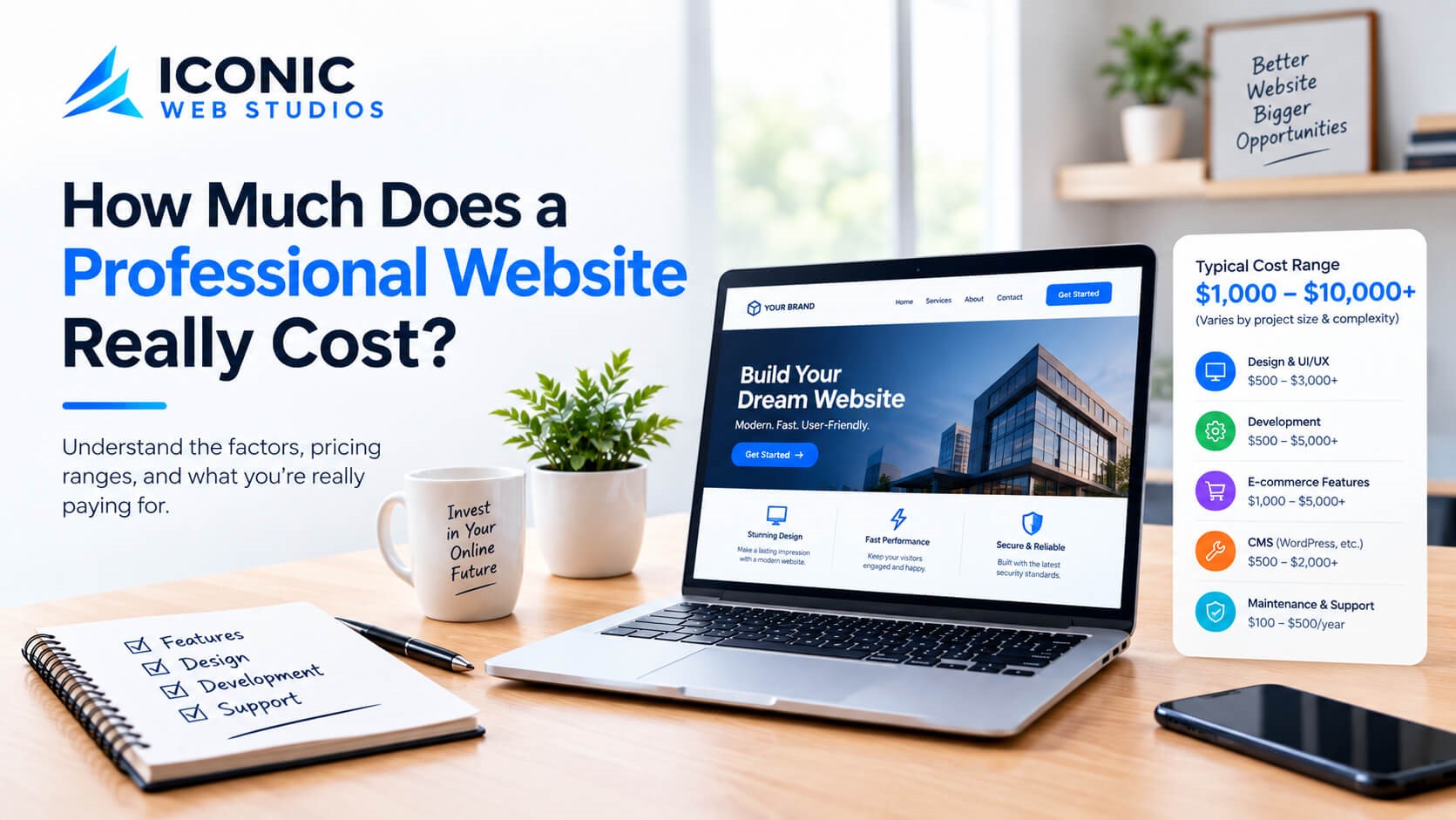
"How much will my website cost?" is one of the first questions almost every business owner asks, and one of the hardest to answer with a single number. The honest truth is: it depends.
A simple five-page business website and a fully custom e-commerce platform with hundreds of products are two completely different projects, even though both are technically "a website."
Instead of throwing out a vague price range and hoping it helps, let's walk through exactly what drives website costs, so you can understand what you're actually paying for and make a smarter decision for your business.
Why Website Pricing Varies So Much
Think of a website the way you'd think about building a home. A basic starter home and a fully customized property with unique architecture, smart technology, and premium finishes will cost vastly different amounts, even though both are still "houses." Websites work the same way. The price reflects the complexity, customization, and functionality behind it.
Here are the core factors that shape what you'll pay:
1. Type of Website
The type of site you need is the biggest factor in pricing.
- Basic business or informational website: A handful of pages covering your services, about page, and contact information. This is typically the most affordable option.
- E-commerce website: Includes product pages, shopping cart functionality, payment processing, and inventory management. More moving parts mean more development time.
- Custom web application or platform: Think booking systems, membership portals, or dashboards. These require significant custom development and cost considerably more.
2. Design: Template vs. Custom
A website built on a pre-made template is faster and cheaper to launch. It works well for businesses that need a professional presence quickly without extensive brand customization.
A fully custom website design, built from scratch around your brand's identity, takes more time and design work, but it also gives you a unique look that doesn't feel like every other site in your industry. This is where the cost difference becomes noticeable, but so does the impact on how your brand is perceived.
3. Number of Pages and Content Complexity
More pages generally mean more cost, especially if each page has unique layouts, custom graphics, or specific functionality like forms, calculators, or interactive elements. A simple five-page site will always cost less than a fifty-page resource-heavy website.
4. Custom Functionality and Integrations
This is often where costs shift the most. Features like:
- Booking or appointment scheduling systems
- Customer login portals
- Payment gateway integrations
- Third-party software connections (CRM, email marketing, inventory systems)
- Custom search filters or interactive tools
...all require additional development time. The more specific and unique your functionality needs, the more custom coding is involved, which increases the investment.
5. E-Commerce Specific Costs
If you're building an online store, additional factors come into play:
- Number of products and how they're categorized
- Payment processor setup and security compliance
- Shipping calculator integrations
- Inventory management systems
- Product filtering and search functionality
A store with 20 products is a very different project than one with 2,000 products spread across multiple categories with variants.
6. UI/UX Design Work
Good design isn't just about looking nice, it's about guiding visitors toward taking action, whether that's making a purchase, filling out a form, or booking a call. Professional UI/UX design services involve research into how your specific audience browses and behaves, then building a layout around that. This strategic layer of design adds value, and cost, beyond simple visual styling.
7. SEO and Marketing Setup
Some website packages include basic SEO setup, proper page structure, meta descriptions, image optimization, and technical foundations that help your site get found on Google. If you want ongoing SEO or marketing services layered in, that's typically a separate, recurring investment rather than a one-time cost.
8. Ongoing Maintenance and Support
A website isn't a one-and-done purchase. Plugins need updates, security needs monitoring, and content often needs refreshing. Some agencies include a maintenance period after launch, while others offer it as an ongoing monthly service. Either way, it's worth factoring into your overall budget rather than treating website costs as a single upfront number.
So, What Should You Actually Budget?
Rather than fixating on an exact number, ask yourself these quick questions:
- Do I need a simple informational site, or complex functionality?
- Will I be selling products online, and if so, how many?
- Do I want a custom design, or is a well-executed template acceptable?
- Do I need ongoing SEO/marketing support, or just the website itself?
- Will I need help maintaining the site after launch?
Cheap vs. Valuable: What to Watch Out For
It's tempting to chase the lowest quote, but website pricing often reflects what's actually included. An unusually cheap website may skip proper responsive design testing, use bloated templates, or leave out SEO fundamentals entirely, costing you more down the line in lost traffic, poor performance, or a redesign sooner than expected.
On the other hand, a higher price doesn't automatically mean better value either. The key is transparency: a good web design company will walk you through exactly what's included, why it's priced the way it is, and what results you can realistically expect.
Frequently Asked Questions
Final Thoughts
There's no single "correct" price for a professional website because there's no single type of business. Your website should be priced around what your business actually needs to grow, not a generic package that may include too little or too much for your goals.
The best next step is a conversation with a web development team that takes time to understand your business before quoting a number. That way, you're not just paying for a website, you're investing in a tool built specifically to bring in leads, sales, and long-term growth.